Building a succulent collection
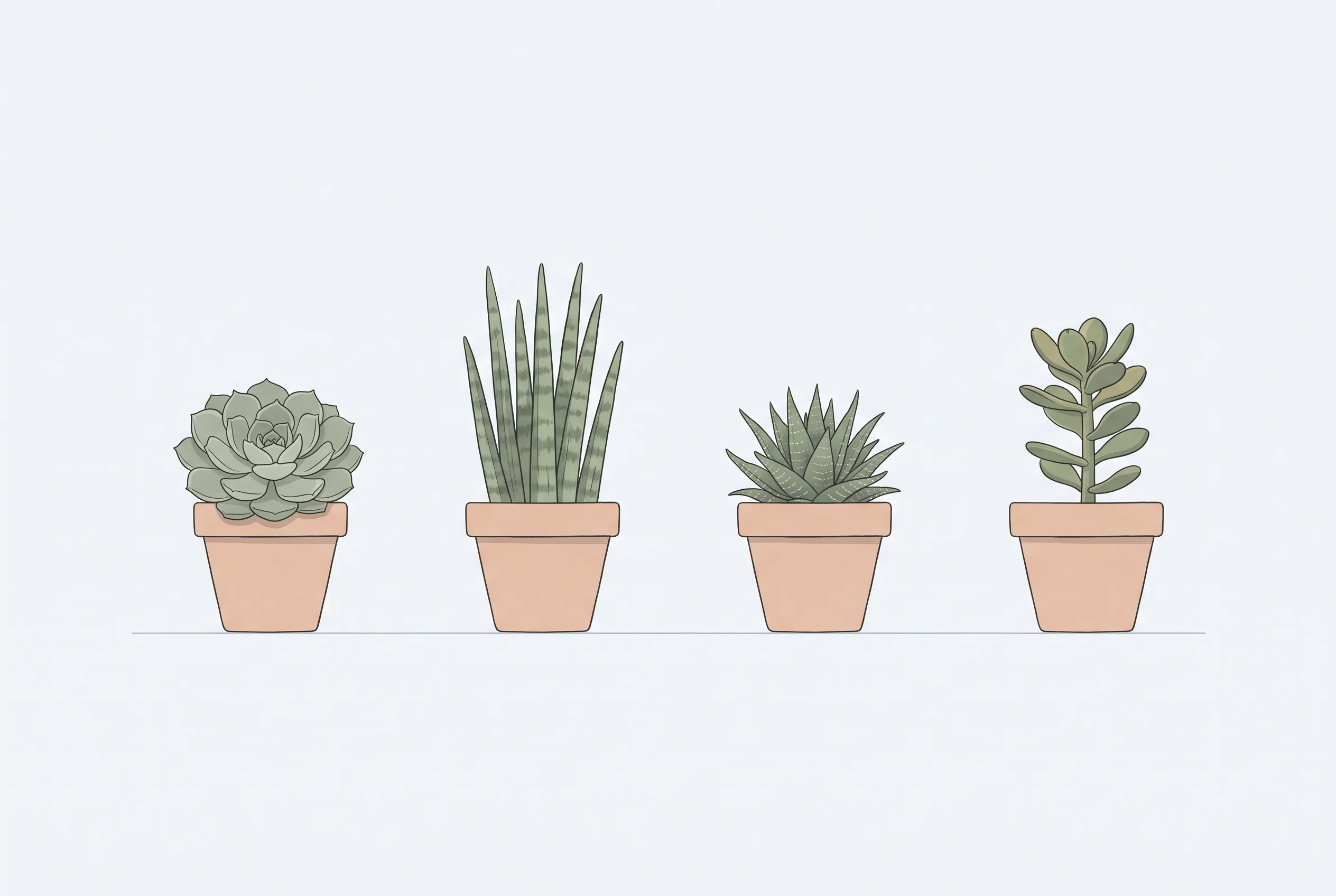
I own forty-three succulents. I keep losing count. They live on shelves, windowsills, and corners of my apartment. Each one is hardy, resilient, and requires almost nothing from me.
This is by design. I learned early that the plants most likely to survive my learning curve were the ones built for neglect. Succulents are the answer to "I want to grow something but I'm bad at plants."
Why Succulents?
A succulent is a plant that stores water in its leaves. It survives droughts. It thrives in harsh conditions. It grows slowly, which means you have time to course-correct if you make a mistake.
Compared to a fussy tropical plant that needs humidity and consistent warmth, a succulent is forgiving. You forget to water it? It survives. You overwater it? It tells you clearly (by rotting) that you need to stop. The feedback loop is short and obvious.
The System
My succulent system is minimal: a shelf by a window, well-draining soil, and a routine. I water once a week in summer, once every two weeks in winter. I rotate them seasonally. I propagate babies when leaves fall.
The collection grew because propagation is almost trivial. A fallen leaf can become a new plant. A broken stem can be replanted. Failure becomes an opportunity to expand.
What This Taught Me
Building a collection of succulents taught me something about systems: Simple, resilient, and easy to maintain scales. Trying to grow forty- three orchids would be a nightmare. Forty-three succulents is just a hobby that barely demands my attention.
The same principle applies to product, to teams, to any system you're building. Design for resilience. Build in slack. Make failure a step in the process, not a catastrophe.
My succulents are a living argument for simplicity. They're not the most beautiful plants. But they're alive, they're growing, and they require almost nothing. That's design.