What audit taught me about product
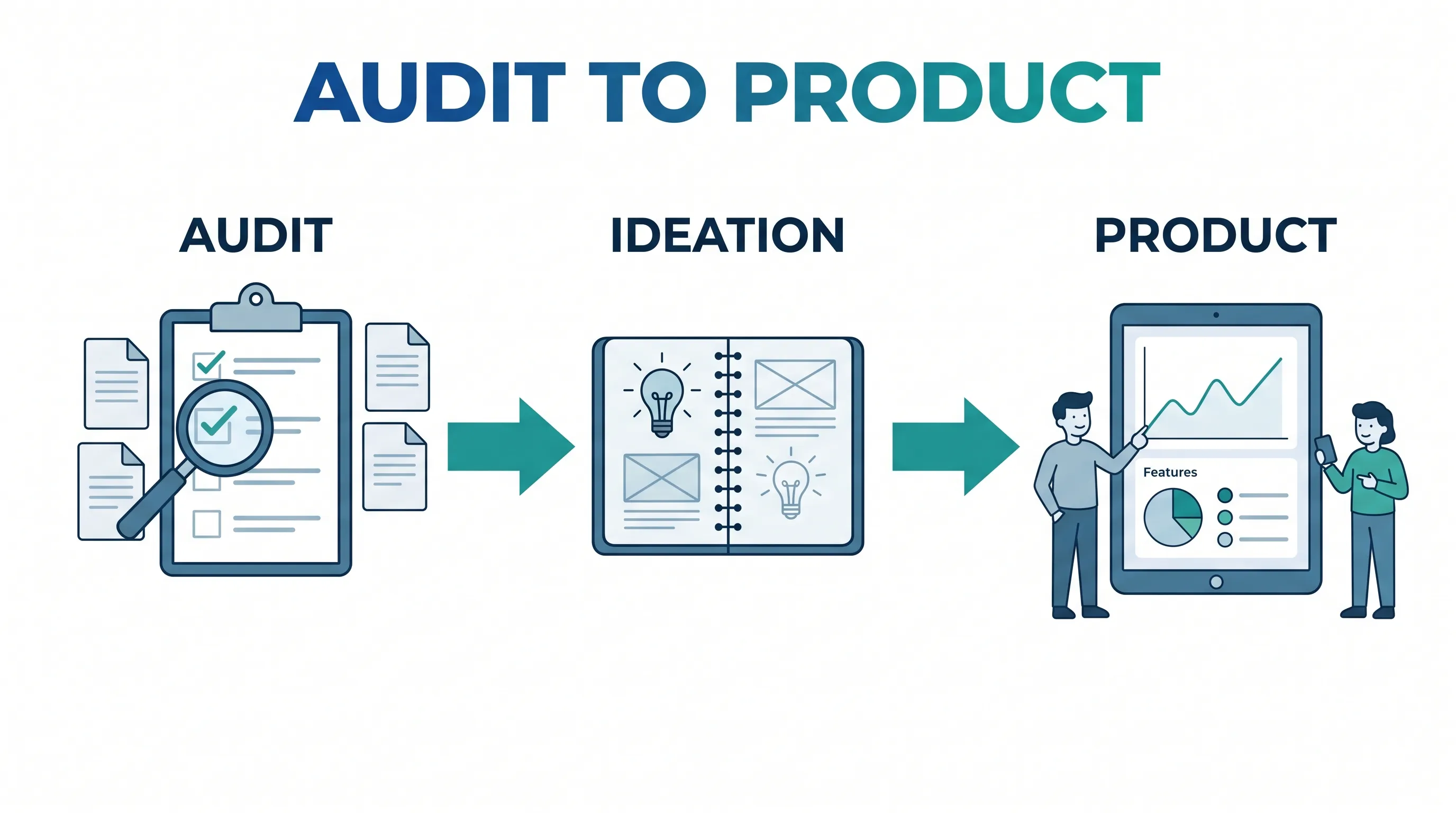
Four years in an audit firm rewired something fundamental about how I read a brief, evaluate a system, or trust a stakeholder. I didn't realize this until I was three months into digital marketing at Themefisher, watching my team move fast on decisions that made me deeply uncomfortable.
The audit mindset is about verification before action. Find the trial balance. Follow the receipts. Prove it works before you sign it. Finance is meticulous about truth because the consequences of being wrong aren't theoretical—they're audited, litigated, and published.
The Precision Tax
In audit, I learned that every line item matters. You don't skip checking something because it's probably fine. You don't assume a control is working because the person implementing it seems competent. You verify. You document. You sign off on what you can defend.
This habit doesn't translate cleanly to growth work. In marketing, you ship fast, test, and iterate. There isn't always a trial balance. You can't always verify before moving forward. Sometimes you make bets on intuition.
What I brought from audit that actually mattered: a deep resistance to handwaving. "Probably fine" is not a strategy. "We hope it works" is not a plan. When I joined Zeon as a project manager, this became clearer: the teams that win aren't the fastest—they're the ones that verify assumptions before scaling them.
Accountability by Default
Audit taught me something about living with your decisions. When you sign off on a financial statement, your name is on it. There's weight to that. It's the opposite of disappearing into a large system.
In product work, this translates to a kind of ownership that's uncomfortable but necessary. Not "my team did this" but "I did this, and here's why it's right." It makes you think twice before shipping something you don't actually believe in.
What I Let Go
I didn't carry over audit's perfectionism. That would have killed my ability to make decisions under uncertainty. I also didn't keep the defensive posture—the reflexive assumption that people are trying to hide something. Growth work requires trust.
But the core thing stayed: the belief that systems matter more than speed, and that verification—real verification, not just eyeballing it—is how you build something that lasts.
Looking back, I don't think I changed careers. I brought audit into growth marketing, and then into product management. Each role absorbed the last one, layered on new skills, but never erased the foundation.